
How Clovis Arrests Work
Clovis anchors Curry County as both its seat and its biggest city. The 2020 Census put the population at 38,567, per Census QuickFacts for Clovis. Location alone doesn't tell you who made the arrest, though. A Clovis arrest record might come from Clovis Police, the Curry County Sheriff's Office, or New Mexico State Police. It could also come from another authorized agency. Keep the agency label attached to whatever source you use. The Curry County Adult Detention Center provides detention for both county and city law-enforcement agencies. So its inmate inquiry is the main public custody check. It covers any adult booked on a Clovis arrest. Remember, the jail and Clovis Police are different offices. The jail keeps booking and custody records. Clovis Police keeps incident files, call logs, and media. A booking row can list a charge, bond, court number, and whether a photo exists. It won't show the final outcome by itself. For the plea, sentence, or dismissal, turn to the New Mexico court docket.
Where Clovis Arrests Appear
Clovis Police publishes no daily arrest roster. Custody information for the city flows through the county jail inquiry instead. Police reports and incident files come from Clovis Police directly. Court events belong to the judiciary. Eastern New Mexico News adds a dated secondary trail of local arrests. Commercial pages may repeat public data. But they neither control the official record nor reflect current custody.
| Channel | What it provides | Status |
|---|---|---|
| Curry County Inmate Inquiry | Adult booking, release, in-custody, charge, and possible photo fields | Official jail system |
| Clovis Police Records | Incident reports, call logs, body-camera video, photos, and audio | Official city source |
| New Mexico Case Lookup | Docket events and case outcomes, with public-access limits | Official court source |
| Eastern New Mexico News archive | Dated Clovis and Curry jail-log articles, often with booked and released text | Local news, not current custody |
| Commercial county archives | Republished booking details that may be old, incomplete, or stripped of context | Unofficial; verify at source |
Official sources rank first because each one owns a stage of the record. A newspaper arrest log can linger online after a jail row changes. Private archives last even longer. Sometimes a charge or outcome is missing. Neither proves someone sits in custody today. A "Clovis" label in a news story means little on its own. It doesn't confirm that Clovis Police made the arrest.
Note: No public daily Clovis Police arrest roster was found, so county custody and city records remain two distinct channels.
Find a Clovis Arrest Booking
The official Curry County inquiry is a name search. It is not a photo gallery or a Clovis-only feed. Its form takes a first and last name and offers an archive checkbox. Start with current records. The person may have been released. Or the booking may be older. In that case, run the same search again with archive records included. The archive widens the net. But the county promises no fixed retention period or complete history.
- Search the Curry County inquiry by last name and first name, checking the spelling before ruling out a match.
- Compare the booking date, release date, inmate ID, and in-custody field to avoid merging people with similar names.
- Open the booking number for the detail record, which may show charges, bond, case number, court date, history, and a photo state.
- Repeat with archive records included when the current search is blank and the event may no longer be active.
- If no record appears, contact Clovis Police for its incident record or the sheriff records unit for a county-created record.
A "No Photo" value just means the public row shows no image. It doesn't prove no photograph was taken. The county draws its own booking-photo and roster distinctions. These are covered in the Curry County mugshots and booking-photo section. Treat a blank release date with the same care. That field tells you nothing about whether someone has remained in one facility continuously.
Clovis Police Records
The Clovis Police Department Records unit is the city's channel for police reports and city-held media. It handles incident reports, call logs, body-camera video, photographs, and audio. Some material stays off limits. That includes medical information and suspect details where no arrest occurred. Anything involving juveniles is protected as well. The custodian sets those limits under state law, not the jail roster. Costs are posted plainly. Incident reports and call logs run 25 cents per page, with some electronic copies free. Media copies cost $10 on CD or DVD. An 8GB USB runs $5, and a 16GB USB is $7.50. Confirm current prices and formats with the unit before paying. A narrow request works best. Name the incident date and place. Include the report or case number if known, plus the specific item wanted. Avoid asking for an unrestricted file on a person.
Clovis Police Department Records300 N. Connelly Street
Clovis, NM 88101
(575) 763-9428
pdrecords@cityofclovis.org
Monday through Friday, 8 a.m. to 5 p.m., excluding weekends and holidays
Formal requests go through the City of Clovis IPRA page. That page points to the NextRequest portal. New Mexico never requires a reason for a records request. The record itself, though, must be described with reasonable particularity. The city aims to produce records immediately, or as soon as practicable. The framework allows 15 calendar days. A record may belong to the sheriff or Curry ADC rather than Clovis Police. Route the request to the office that keeps it. Contact details and the media-request route sit on the official Clovis Police Records page.
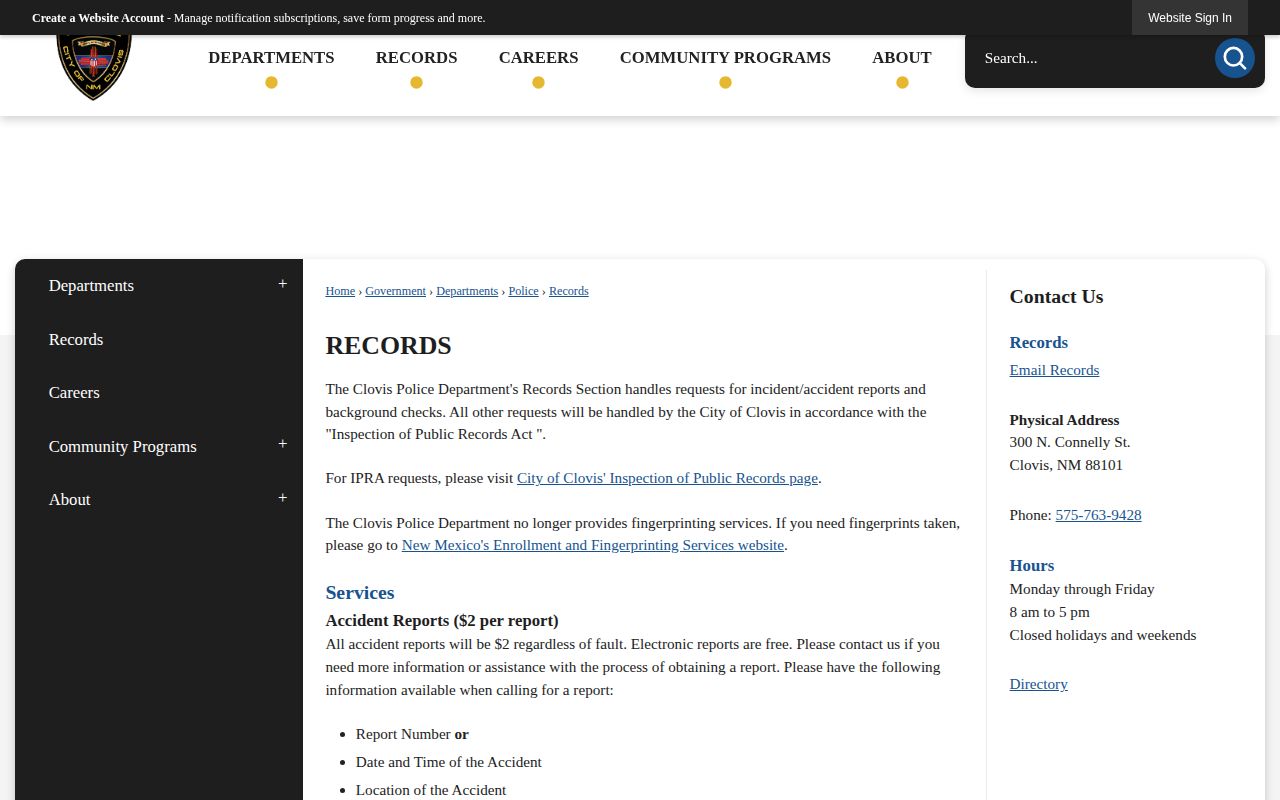
When the item you need is a Clovis Police report, image, audio file, or body-camera record, this city source is the straightest path.
Clovis Agency and Jail Records
Clovis splits its records across two doors. A county inquiry through Curry ADC shows whether an adult booking exists and pulls the jail's detail fields. Clovis Police Records is the other door. That office holds the incident report, call log, photographs, audio, and body-camera material tied to a police event. Neither answer replaces the other. A police incident record can exist before any jail entry posts, and a county booking can stay searchable long after the city event has passed.
Source ownership matters when a search comes up empty. Recent bookings lag. A released person may need the archive checkbox. A case handled by another agency may belong with the sheriff records email rather than the city portal. Juveniles are never housed at the Curry County adult facility, so their names are not searched or published there. The county says they go to contracted centers outside the county until court handling. For a formal city request, the Clovis IPRA guidance and NextRequest route spells out the process.
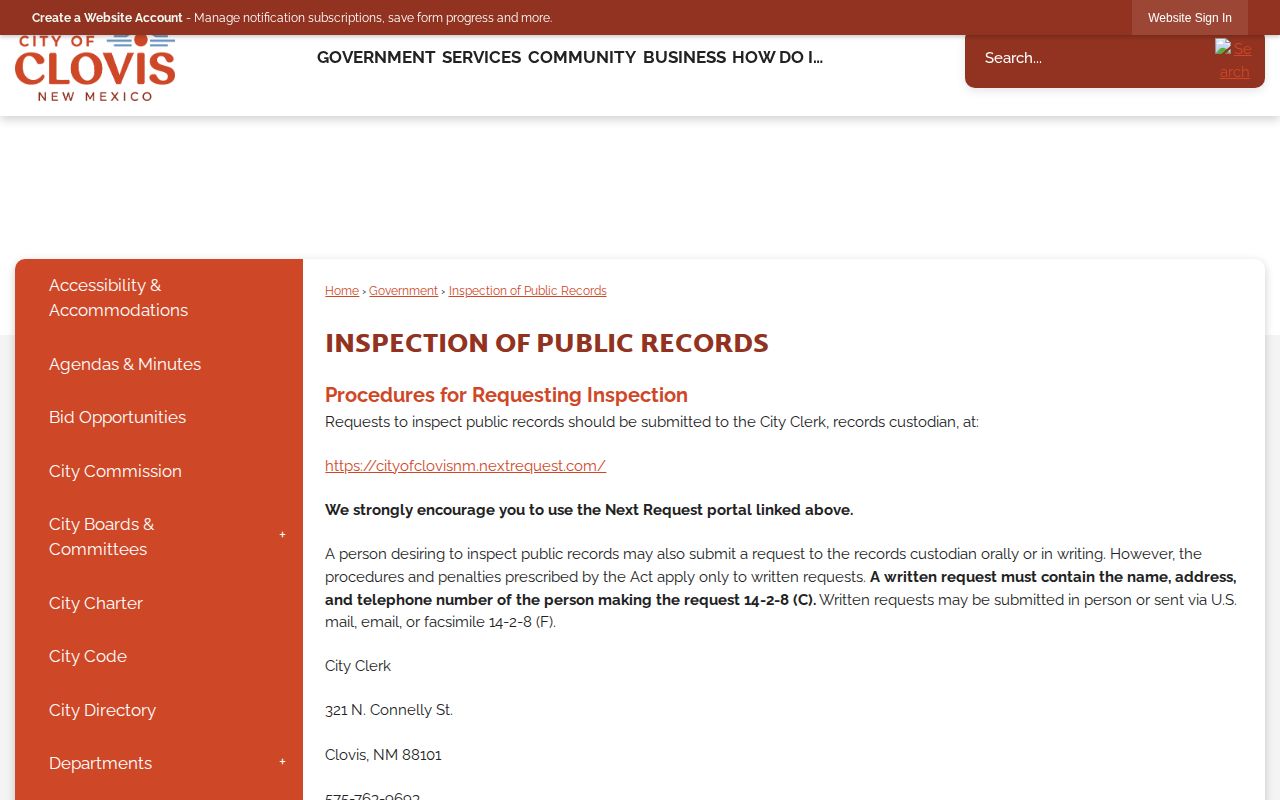
Use this route for a defined city record. The county inquiry stays the first check for current adult custody.
Note: Request the record from its custodian; the city, sheriff, jail, and court each hold a different part of the file.
Clovis Jail Logs and News
Eastern New Mexico News offers the best dated coverage of Clovis bookings around. Its jail log sets Curry and Clovis entries apart from Roosevelt and Quay material. Watch for the "Booked" and "Released" headings. The archive also holds long date spans. Examples include February 10 through 17 and March 24 through 31. Knowing the rough week of an arrest is often enough to track down the entry.
The paper's log is text first. It cannot replace the official booking photo or the full jail detail page. Hang onto the publication date. Note the period a log covers. A dated article can stay online long after the person has left custody. The sheriff's own news archive is official for selected releases and arrests. Yet it stops short of a complete daily list. Clovis Police press material runs selective in the same way.
Commercial Curry County arrest sites put names, dates, and booking photos on display. Treat them as secondary at best. Many sit stale or half-finished. New Mexico Arrests.org lists plenty of charges as unknown. Other outlets make update claims that Curry County never confirmed. Before trusting a repeated item, check it against Curry ADC and the court docket.
Clovis Court Follow-Through
Where an arrest goes next depends on the court. Curry County District Court and Magistrate Court both operate at the county courthouse complex. Clovis Municipal Court runs municipal matters on its own track. Felonies generally land in District Court. Magistrate Court handles limited-jurisdiction matters. It also runs preliminary proceedings in proper cases. So a municipal ordinance case is not an automatic felony.
New Mexico Case Lookup opens public docket information to anyone. The general view stops short of document images. Search the right court type and location. Then match the case number to the booking detail where one exists. Juvenile cases and personal identifiers stay excluded. Some other material is limited too. If a case is absent, call the clerk rather than assuming dismissal.
- Booking
- The jail intake record created after an arrest.
- Bond
- A court-set condition related to release; it is not a finding of guilt.
- Disposition
- The recorded court outcome, such as dismissal, plea, acquittal, or judgment.
- Release
- A change in custody that does not by itself resolve the court case.
State and federal tools matter only once custody moves. The New Mexico Corrections Department does not run city or county jails. Its offender search tracks state prison. Probation and parole status appears there too. The Bureau of Prisons and ICE keep entirely separate federal systems. For a Clovis arrest, start with the local level. Use city and county sources first. Then follow the record as the custody stage changes.